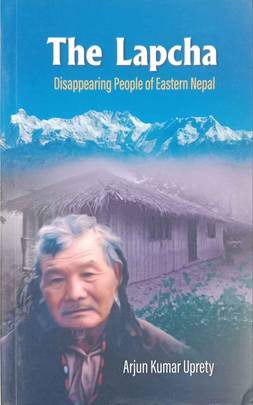
The Lapcha Disappearing People of Eastern Nepal


The Lapcha Disappearing People of Eastern Nepal
Paperback
From the backcover
The Lapcha community, listed among Nepal's ethnic groups, is recognized as an indigenous population. They hold a belief that their ethnic origins and development are rooted in the foothills of the Kanchanjunga Himalaya. Within the Lapcha community, a distinctive marriage custom prevails, where a young man seeking to marry must spend a year at the home of his chosen bride, performing tasks assigned by her family to earn their trust before the marriage is permitted. Community leadership is provided by the Bungthing (priest) and Yaba (Shaman), who guide the society's cultural practices and traditions, ensuring their continuity and adherence. Historical accounts indicate that the last Lapcha king, Sigam (Punu), entered into a ceasefire agreement with the Koch Community, pledging to refrain from further conflict. This commitment has fostered a high degree of social harmony and goodwill within the Lapcha community.
The thematic diversity of Lapcha folk music exemplifies how oral traditions serve as dynamic, living repositories of indigenous wisdom, adapting to contemporary contexts while preserving their historical significance. Lapcha folk dances are not merely performative acts but are integral to the community's cultural ecology. They encapsulate historical narratives, agricultural rhythms, and social values, functioning as embodied archives of Lapcha heritage.
All Editions
Share Your Thoughts
Your review helps others make informed decisions
Click on a star to start your review