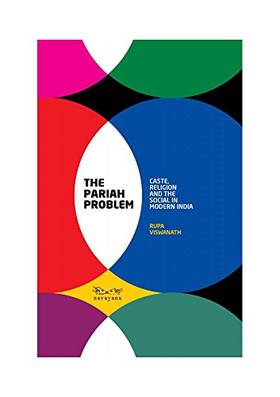
Navayana The Pariah Problem
Navayana The Pariah Problem
Paperback
Rs 959
Delivery in 1-3 weeks
Pariah is a cruel word. For most speakers of English today, only the dimmest memory of what it once meant survives. But for its victims the cruelty is not forgotten, because it is not just a memory. This is a book about the joint efforts of native elites and British colonizers to avoid facing the fact that they were the beneficiaries of that cruelty.
Drawing on newly discovered sources, Viswanath traces the emergence of what was called the "Pariah Problem." She shows how landlords, state officials, and well-intentioned missionaries conceptualized Dalit oppression in a way that foreclosed any real solutions: after all, the entire agrarian political-economic system depended on the unfree labor of those classed as untouchable.
Welfare efforts directed at Dalits—by the colonial state, Hindus and Christian missionaries—focused on religious and social reform, but not political empowerment or structural transformation. This laid the groundwork for the present day, where the postcolonial state and elite reformers continue to sideline issues of landlessness, violence, and political subordination.
About the Author
Rupa Viswanath is professor of Indian Religions at the Centre for Modern Indian Studies at the University of Göttingen.
Drawing on newly discovered sources, Viswanath traces the emergence of what was called the "Pariah Problem." She shows how landlords, state officials, and well-intentioned missionaries conceptualized Dalit oppression in a way that foreclosed any real solutions: after all, the entire agrarian political-economic system depended on the unfree labor of those classed as untouchable.
Welfare efforts directed at Dalits—by the colonial state, Hindus and Christian missionaries—focused on religious and social reform, but not political empowerment or structural transformation. This laid the groundwork for the present day, where the postcolonial state and elite reformers continue to sideline issues of landlessness, violence, and political subordination.
About the Author
Rupa Viswanath is professor of Indian Religions at the Centre for Modern Indian Studies at the University of Göttingen.
All Editions
Paperback
ISBN13: 9788189059729
NAVAYANA, 2014
Share Your Thoughts
Your review helps others make informed decisions
Click on a star to start your review