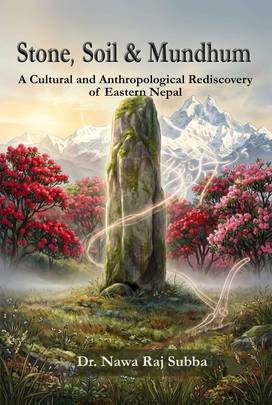
Stone, Soil and Mundhum A Cultural and anthropological rediscovery of eastern Nepal
Stone, Soil and Mundhum A Cultural and anthropological rediscovery of eastern Nepal
E-book
The Stone, Soil and Mundhum is an anthropological attempt to unearth the forgotten history of Eastern Nepal, its stone and soil, and its indigenous history, much of which has been buried under the history and processes of Kathmandu.
Dr. Nawa Raj Subba discusses the region from Madhes to the Himalayas in historical, linguistic, social anthropology, archeological, ecological and contemporary genetic light. The book poses questions to the connection between indigenous identity, land, culture, religion and political history.
The book discusses the significance of Chotlung, the religious and cultural strata and chambers of Halesi (Halesung) and the potential cultural linkages between plains and hills. Also, it introduces the history of Kipat system, the ecological relationship between humans and land, political anthropology and the evolution of Kirat identity in the diaspora.
One of the book's main themes is that Madhes and hills have never been distinct cultural worlds. Older connections are suggested by linguistic, cultural, and historical evidence, many of which are not included in conventional narratives.
The book also relates Chotlung philosophy with the experience of young people living away from home in the cities of London and Hong Kong. From this context, indigenous knowledge cannot only be considered a documentation of history. Reading of the essays can grow the sense of belonging and cultural grounding in a rapidly changing world.
Stone, Soil and Mundhum is thus an investigation into Eastern Nepal and an examination of identity, nature, history and contemporary life. It encourages readers to see Nepal from the East, where many of Nepal's older cultural memories are still alive.
Share Your Thoughts
Your review helps others make informed decisions
Click on a star to start your review